
Local proof
4.8
Google rating across 48 homeowner reviews.
Firm quotes, prep-first execution, and daily communication from first walkthrough to final handoff.
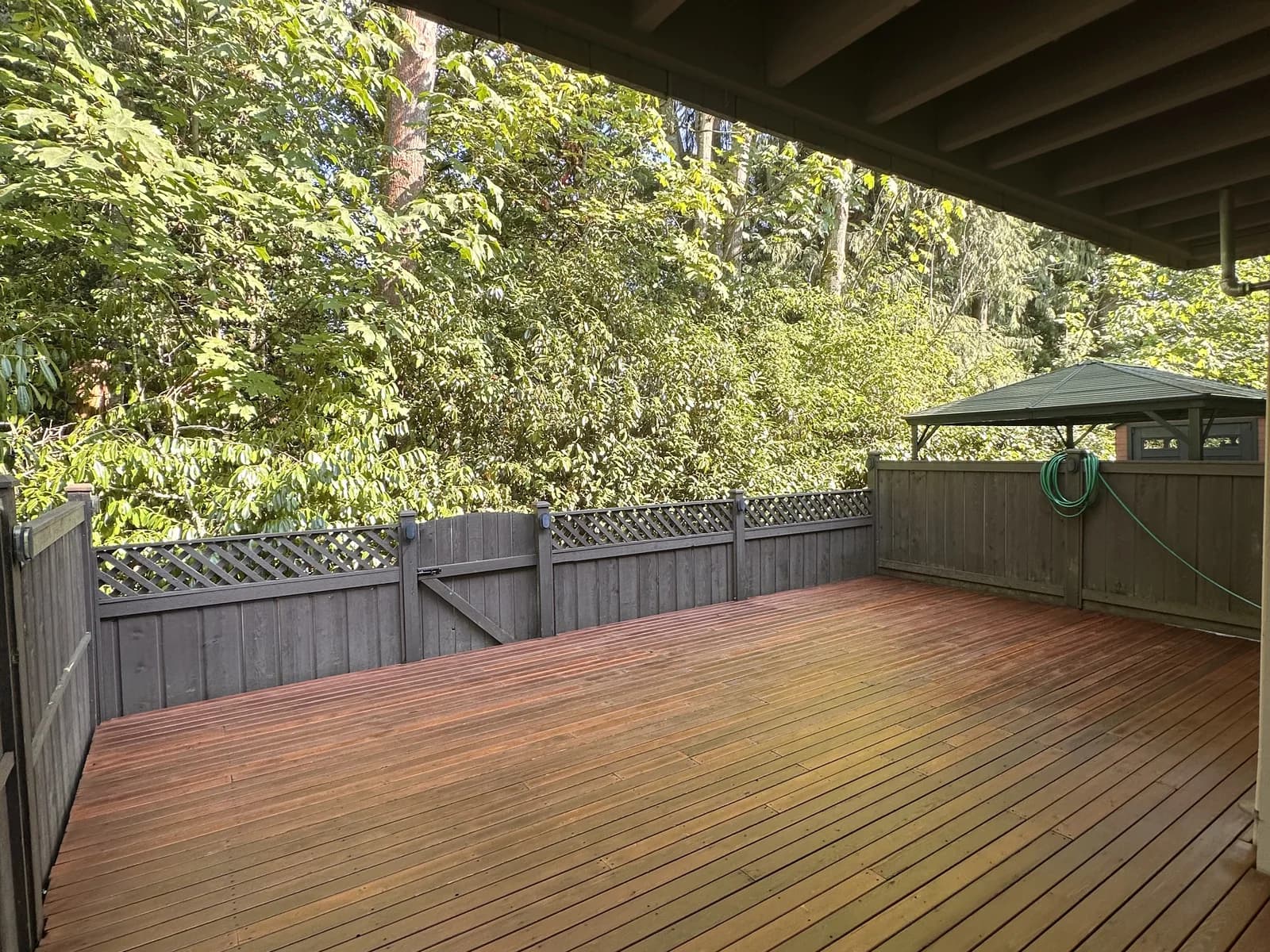
If you need deck and fence staining in Vancouver, choose a prep-first team. We define scope by substrate, map product systems before production, and run a controlled schedule from setup to final walkthrough.
Vancouver • Deck & Fence Staining
Deck and fence staining projects succeed when moisture levels, prep timing, and penetration depth are controlled.
Vancouver decks face 166 rain days a year. Cedar decking in Kitsilano and Point Grey absorbs moisture that never fully dries between storms on covered surfaces. Your back-lane fence gets rain from both sides, which means it weathers twice as fast as a sheltered wall. Penetrating stain systems outperform film-forming products here because they let trapped water escape.
Vancouver deck and fence staining typically ranges from $1,500 to $5,500 depending on square footage, wood condition, and whether power washing and grey-wood restoration are needed.
Local proof
4.8
Google rating across 48 homeowner reviews.
Firm quotes, prep-first execution, and daily communication from first walkthrough to final handoff.
Where we work
Kitsilano • Mount Pleasant • Dunbar • Kerrisdale
Every area has different light, moisture, and wear. That local context changes how we plan deck and fence staining from the start.
View the Vancouver hubVancouver Deck & Fence Staining
Most painting scopes overlap. These linked guides help you compare the full plan, from your local service page to related finishes and the broader city hub.


FAQs
These are the questions we usually answer before a project is booked, priced, and placed on the calendar.
Book a walkthrough and get a firm quote, start dates, and written prep standards before anything is scheduled.
Book for July or August when your wood has the best chance to dry fully before stain application. Early June can work if the spring has been dry.
Expert guides
Homeowner-focused guides that walk through the decisions that drive finish quality, timeline, and final cost.